The Library Saved Me $400 This Year
I used to buy books the way some people buy lottery tickets — constantly, hopefully, and mostly without reading them. My shelves were full of spines I’d never cracked. A rough count last January: 47 unread books, bought at an average of maybe $18 each. That’s $846 sitting on shelves, judging me.
This year I switched to the library for almost everything. Here’s the math.
The Numbers
Last year (buying): I bought 31 books at an average of about $19. Total: ~$590. Of those, I read 19. Twelve went straight onto the shelf of good intentions.
This year (library first): I’ve borrowed 34 books from the library. Cost: $0. Late fees: $2.75 (one book, my fault). Books I ended up buying because I wanted to own them: 6, at ~$19 each = $114.
Total this year: ~$117 vs ~$590 last year. Savings: roughly $470. Call it $400 to be conservative, since book prices wobble.
How It Actually Works
The library isn’t the dusty card-catalog place from childhood anymore. Here’s my setup:
Holds are everything. I keep a running list of books I want to read in my phone notes. Once a week, I search the library catalog and place holds on all of them. They trickle in over the following weeks — there’s always something waiting for me at the pickup shelf. It feels like a subscription box I don’t pay for.
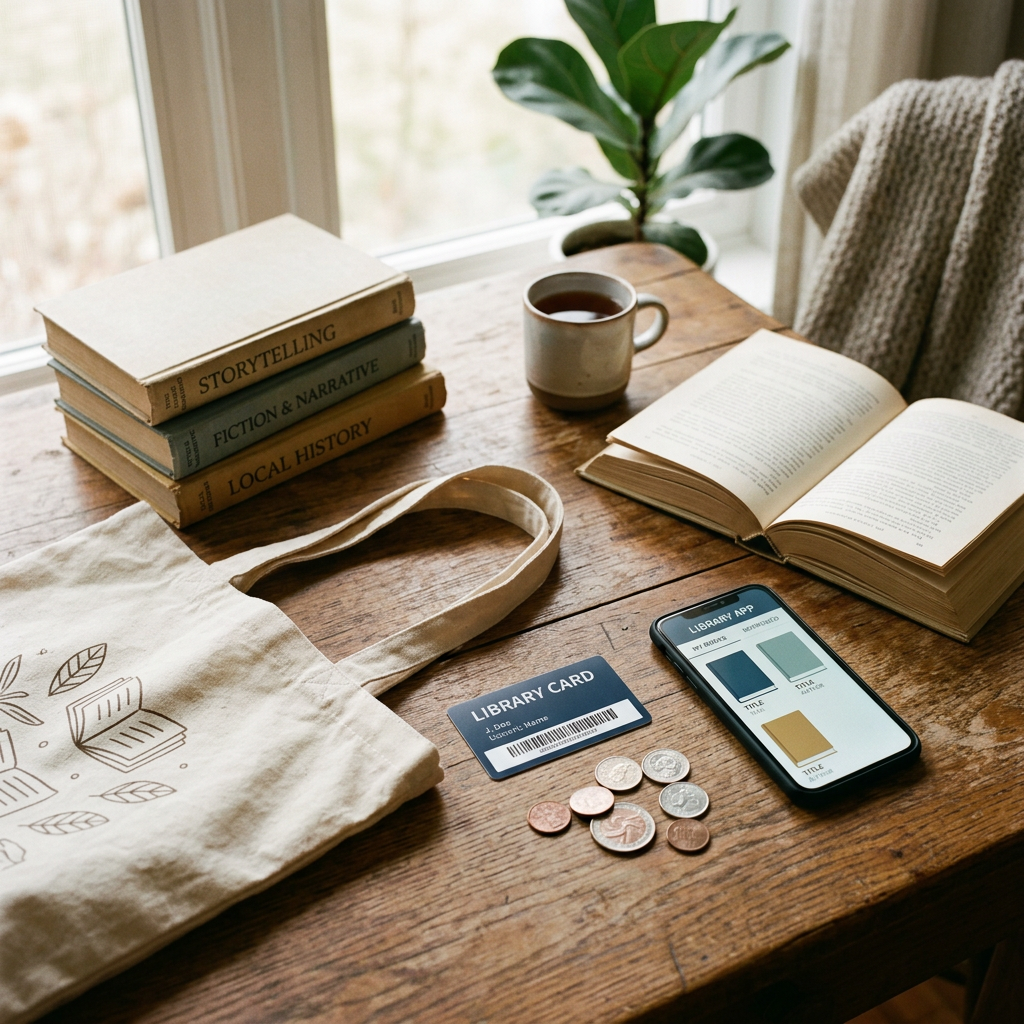
Libby for ebooks and audiobooks. The Libby app connects to my library card. Ebooks have wait lists for popular titles, so I keep 8–10 on hold at all times; something is always becoming available. Audiobooks turned my commute and my dishwashing into reading time — I’ve “read” 11 books this year purely by listening while doing chores.
The buy-it-after rule. If I finish a library book and know I’ll reread it or reference it — a cookbook, a field guide, a favorite novel — I buy a copy. That’s where the 6 purchases came from. Buying after reading means every purchase is a proven winner instead of a gamble. My unread shelf pile has stopped growing entirely.
What I Didn’t Expect
I read more. 34 books so far this year vs 19 finished last year. Removing the “I paid $19 for this, I should finish it” guilt actually made reading fun again. Abandoning a library book halfway costs nothing, so I quit bad books fast and move on. Last year I’d grind through mediocre books out of sunk-cost stubbornness.
The selection is better than I assumed. I expected the library to be thin on new releases. It’s not — my system places holds on bestsellers the week they come out, and they arrive in a few weeks. For backlist titles, it’s instant. The only gap is genuinely obscure stuff, and that’s what the 6 purchases were for.
It fixed the shelf problem. My 47 unread books are down to about 20, because I stopped adding to the pile. The shelves now hold books I’ve actually read and loved, which is what a bookshelf should be.
The Honest Caveats
The library doesn’t replace buying entirely. Here’s what still makes sense to buy:
- Reference books you annotate and return to — buy those.
- Gifts — obviously.
- Supporting authors you love — if a book changed how you think, buying a copy is a fine way to vote. Two of my six purchases were exactly this.
- Small towns — my library system is good. If yours has a weak catalog, interlibrary loans or the Libby waitlist strategy matter more.
The One-Minute Version
Get a library card (free). Install Libby (free). Keep a want-to-read list, place holds weekly, and only buy the books you finish and love. I saved ~$400 this year, read almost twice as much, and my shelves finally hold books I’ve read instead of books I meant to.
The $846 shelf of good intentions is now a $400/year habit of actually reading. I’ll take that trade.