Small Spaces, Big Ideas: What Japanese Minimal Living Can Teach Us

In much of the world, minimalism is a lifestyle trend. In Japan, it has long been an everyday necessity. For generations, Japanese families have learned to live well in small spaces, layering tradition, ingenuity, and philosophy into homes that are compact yet unexpectedly generous.
Generations Under One Roof
Before minimalism was a buzzword on social media, Japanese households were quietly practicing it out of sheer practicality. On a crowded island nation with limited buildable land, homes have historically been small, especially in cities. Yet it is common for multiple generations to share these compact spaces: grandparents, parents, and children navigating one another’s routines within a carefully choreographed floor plan.
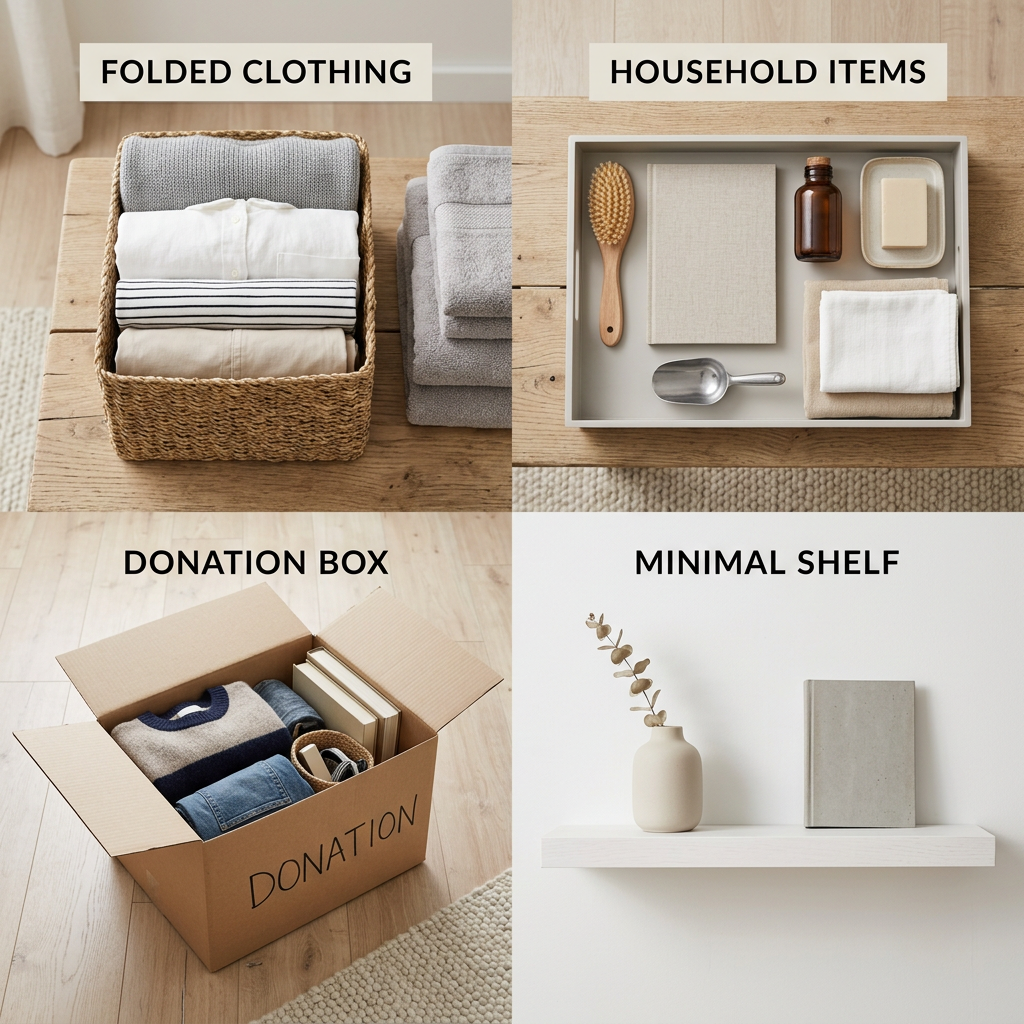
Traditional Japanese houses made this possible with a kind of architectural multitasking. Sliding shoji screens transformed one room into many; a living area became a bedroom when futons were unrolled at night, then a family room again when bedding was folded away. Storage was hidden in staircases, beneath floors, and in built-in cabinetry that made use of every stray corner. The goal was not to own less for minimalism’s sake, but to own what could live harmoniously with others in a finite space.
Wabi-Sabi, Ma, and the Beauty of What Isn’t There
Underlying this spatial efficiency is a distinctly Japanese way of seeing the world. Wabi-sabi, often reduced abroad to “rustic chic,” is more accurately an appreciation of impermanence and imperfection. A home is not a showroom; it is allowed to age, to patina, to carry the quiet evidence of everyday life. This perspective encourages restraint. When you accept that nothing is forever, filling a room with objects feels less urgent.
Then there is ma: the concept of meaningful negative space. Ma is the pause between notes that makes music feel alive; in architecture, it is the empty area that gives a room its calm. In a small Japanese apartment, the decision not to place a piece of furniture is as intentional as the decision to buy one. By leaving sections of the room open, the space feels larger, air can flow, and daily rituals gain a kind of stage.
These philosophies soften what could otherwise feel like deprivation. Negative space becomes a luxury, a quiet rebellion against clutter and excess, even when the floor plan measures only a few dozen square meters.
Why Japan Learned to Think Small
Japan’s minimal living culture did not arise from abstract aesthetics alone; it is rooted in geography and economics. As an island nation with mountainous terrain, much of its land is uninhabitable. The result is dense pockets of urban life where every meter of real estate is hard-won. After World War II, as people migrated from rural areas to cities, micro homes and modest apartments became the norm, not the exception.
In this context, space is precious, but so is dignity. Rather than resigning themselves to cramped quarters, Japanese designers and craftsmen responded with clever solutions: modular furniture, fold-away kitchens, and appliances sized for tight footprints. Efficiency became a quiet national design language, visible in everything from bento box compartments to the precision of a train timetable.
From Homes to Hotels: Hospitality Learns to Shrink Gracefully
Today, as global cities grapple with soaring real estate costs and travelers increasingly seek stylish yet affordable stays, hospitality designers are looking to Japan for cues. The challenge is familiar: how do you make a compact hotel room feel generous, not stingy? How do you offer comfort without clutter?
Inspired by Japanese apartments and business hotels, modern boutique properties are embracing built-in storage, sliding partitions, and transformable furniture. Beds are framed with integrated shelving so nightstands become unnecessary. Desks tuck into the wall when not in use. Lighting is layered to carve out zones within a single room, echoing the fluid boundaries created by shoji screens.
The Humble Genius of the Toilet-Integrated Sink
One of the most unassuming yet transformative examples of this Japanese ingenuity is the toilet-integrated sink unit. At first glance, it looks like an ordinary compact toilet. But the lid of the water tank is, in fact, a small hand-washing basin. After you flush, clean water flows from a faucet over the tank lid so you can wash your hands. That water then drains directly into the tank, where it is stored for the next flush.
In a single gesture, this design saves space, water, and materials. There is no need for a separate sink or additional plumbing; a tiny bathroom suddenly feels more open. It is the architectural equivalent of a well-packed suitcase, where every element earns its place and often performs more than one function.
It is no surprise that this once-quirky feature of Japanese homes and budget hotels is now showing up in design-forward boutique properties and compact urban hotel rooms across the world. For guests, it is a small moment of delight and discovery. For operators, it is a way to reduce environmental impact and fit more comfort into less square footage.
Learning to Value What We Don’t Fill
Japanese minimal living reminds us that constraints can be catalysts. Faced with limited land and dense cities, Japan developed a culture that treats space as a shared resource and emptiness as something worthy of protection. As hotels borrow from this playbook, we get a glimpse of a future where comfort is measured not just in thread count and floor area, but in how thoughtfully a room invites us to breathe, move, and notice what isn’t there.