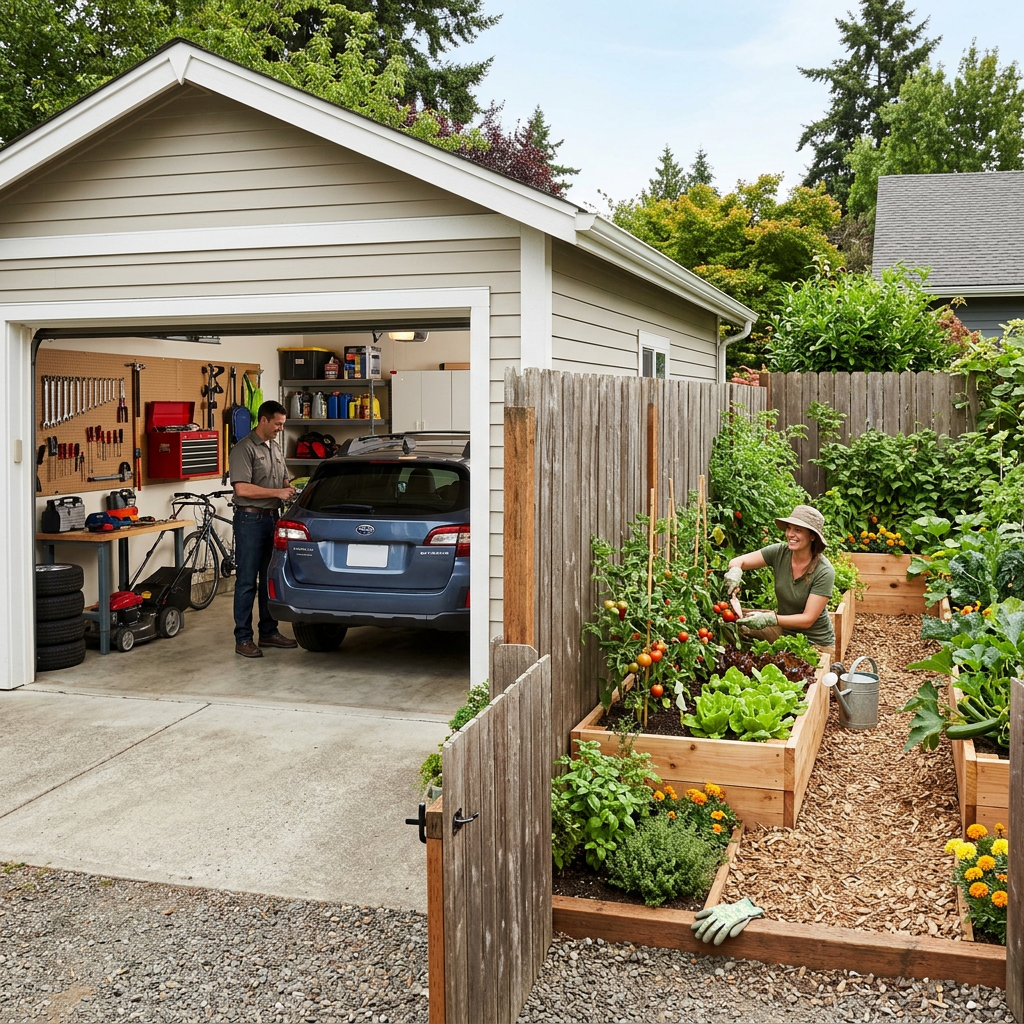

When I first shared that I was building a minimalist home in Canada without a garage, a lot of people thought I was joking. Who skips a garage in a place where winter can feel like a full-time job? But I was serious. Instead of pouring concrete and framing a box for my car, I used that space and budget to create an organic garden with raised beds, fruit trees, and flower borders. In this post, I want to walk you through why I made that choice, what it actually saves, what it really costs in day-to-day life, and whether it might make sense for you.
Why I Chose to Live Without a Garage
Minimalism, for me, isn’t about empty rooms or white walls. It’s about being intentional with every square foot and every dollar. When I started planning my home, the garage kept bothering me. It was thousands of dollars and a big chunk of land dedicated to something I didn’t truly value: indoor parking and a big storage room for stuff I didn’t want to own in the first place.
I sat down with my plans and asked a simple question: if I didn’t build this garage, what could I do instead? The answer came quickly. I pictured raised beds full of greens, berry bushes, a few fruit trees (apple, peach, and plum), and flower beds wrapped around a small seating area. It felt more like the life I actually wanted: outside more, closer to my food, and less beholden to a vehicle and a pile of belongings.
Once I framed it that way, the idea of a garage started to look less like a default requirement and more like a very expensive habit.
The Real Cost of a Garage: Construction and Land Use
Let’s talk numbers, because “minimalism” can easily become a vibe instead of a real financial choice. In many parts of Canada, a basic attached single-car garage can easily add $25,000–$40,000 to a build once you factor in foundation, framing, insulation, doors, electrical, and finishing. A larger double garage can push that into the $40,000–$70,000 range, depending on finishes and local labour costs.
I opted out of all of that. By skipping the garage entirely, I redirected that chunk of my build budget. Only a fraction of it went into my garden. Raised beds, quality soil, drip irrigation, a few young fruit trees, and perennials came in at a few thousand dollars, not tens of thousands. The rest stayed in my pocket, reduced the size of my mortgage, and lowered the stress that comes with a bigger monthly payment.
There’s also the cost of land use. A garage isn’t just expensive to build; it also claims a permanent footprint. On a typical suburban or semi-rural lot, a garage can swallow up the sunniest part of the yard or push the house into a layout that doesn’t make the best use of light. In my case, skipping the garage left me with a prime, south-facing strip of land where the garage would have gone. That’s now the most productive part of my property.
If you’re running the numbers for yourself, here’s a simple way to look at it:
- Estimate the total cost of the garage as if it were a separate mini-building project.
- Calculate the added mortgage payment or interest on that amount over 20–25 years.
- Ask: Would I rather have this money tied up in a vehicle shelter, or working for me elsewhere (debt reduction, investments, or a productive garden)?
When I did that, the garage stopped looking like “normal” and started looking like a luxury I didn’t actually need.
What I Gained Instead: An Organic Garden That Pays Me Back
My “garage” is now a series of raised beds, fruit trees, and flower beds. It doesn’t keep my car warm, but it does feed me and improves my day, almost every single day of the growing season.
In the raised beds, I grow the workhorses of a Canadian kitchen: lettuce mixes, kale, chard, carrots, onions, garlic, peas, beans, and herbs. The fruit trees — apple, peach, and plum — are still maturing, but even young trees can start to give you a meaningful harvest. Around them, I planted flowers to attract pollinators and simply make the yard somewhere I want to sit and breathe for a minute.
Does it save money? Yes, but it doesn’t happen overnight. Here’s how the numbers work out for me:
- Reduced grocery bills. Through the main growing season, I buy almost no lettuce, herbs, or basic vegetables. That might not sound huge, but over months it adds up.
- Bulk preserving. Extra tomatoes become sauce, extra apples get turned into apple butter and frozen slices, and herbs are dried. That carries the savings well into winter.
- Higher quality for the same spend. Even when the dollar savings aren’t massive, the quality of food is. I’d have to spend a lot more at the store to get the same level of freshness and flavour.
The garden also pays me back in less tangible ways. I walk outside, put my hands in the soil, and feel my mind slow down. For a minimalist, that kind of quiet is worth a lot more than a neatly parked car.
The Trade-Offs: What I Actually Miss About Having a Garage
Now for the honest part: skipping the garage does come with real trade-offs, especially in a Canadian winter. This isn’t a fantasy of “no downside.” It’s a trade that works for me, with pros and cons.
Winter parking. Without a garage, my car lives outside. That means scraping ice, brushing off snow, and occasionally digging out after a storm. I’ve made it easier by keeping a good snow brush in the car, using an engine block heater when needed, and parking in a way that avoids drifting snow as much as possible. But I won’t pretend: on a windy, dark January morning, a garage would feel luxurious.
Tool and gear storage. Garages are famous for becoming catch-all storage units: tools, seasonal gear, sports equipment, camping gear, and “I’ll deal with this later” boxes. By not building one, I forced myself to confront how much I actually want to own. I now keep tools in a small, insulated storage room attached to the house and a compact shed in the backyard. Everything has to earn its space.
Messy projects. A garage is a handy buffer between “real life” and messy, dusty work: cutting wood, painting, tinkering with a bike. Without one, I have to be more deliberate. In warmer months, those projects move outside. In winter, I keep indoor projects smaller and better planned. It’s not impossible, but it does require a different rhythm.
These trade-offs are real, but here’s what matters: I knew about them going in, and I decided that dealing with snow and storing fewer things was an acceptable price to pay for the financial freedom and green space I gained.
Alternatives to a Full Garage That Still Work
You don’t have to choose between a full garage and nothing at all. There’s a middle ground, especially if you’re trying to keep your home simple and your costs under control. Here are a few options I seriously considered and still recommend to readers:
- Carport instead of a garage. A simple carport with a roof and open sides costs much less than a full garage and still keeps snow and most ice off the vehicle. It doesn’t become a giant storage box, which is a hidden advantage if you’re aiming for minimalism.
- Small, well-organized shed. Instead of a full garage, a compact shed can handle tools, bikes, and seasonal items. The key is to design it intentionally: wall hooks, shelves, and clear categories so it doesn’t become a dumping ground.
- Insulated utility room. Building a slightly larger utility or mudroom inside the house can cover a lot of what people use garages for: coat storage, boots, basic tools, cleaning supplies, and a spot for recycling bins.
- Shared or off-site storage. For things you rarely use — camping gear you only pull out twice a year, for example — consider sharing with friends or using a very small rented locker instead of building and heating extra square footage at home.
The question I kept asking myself was: “What is the smallest, simplest solution that still works?” That mindset kept me from overbuilding out of habit.
Minimalism, Money, and What a Garage Really Represents
When you zoom out, a garage is more than just a place to park. It’s a symbol of a certain lifestyle: multiple vehicles, lots of tools, plenty of space for impulse purchases and “maybe someday” hobbies. There’s nothing inherently wrong with that, but it comes with a financial and mental load.
By choosing not to build a garage, I made a quiet commitment: fewer possessions, less vehicle dependency, more time outside, and a lower cost of living. My monthly bills are smaller because I’m not heating extra square footage. My property taxes are lower than they would be with a larger structure. My maintenance list is shorter, because there’s no garage roof or door system to repair down the line.
Minimalism isn’t just about decluttering your existing stuff; it’s about not building future clutter into your life in the first place. For me, skipping the garage was exactly that: a way to stop paying for space that mostly exists to hold things I’d rather not buy.
Would Living Without a Garage Work for You?
I’m not here to say everyone should ditch their garage. If you’re a mechanic, a serious DIY builder, or live in a spot with extreme weather and street parking only, a garage might be the right call. But I do think most of us underestimate how flexible our lives can be when we question the “standard” layout of a house.
If you’re planning a build or renovation, here are a few questions to ask yourself:
- What would I do with this budget if I didn’t spend it on a garage?
- How much of what I plan to store actually deserves a permanent, expensive home?
- Could a smaller structure or smarter storage system do the job just as well?
- Would a garden, workshop, or outdoor living area bring me more daily joy than indoor parking?
If your honest answers point away from a garage, it might be worth running the numbers and sketching out an alternative.
Your Turn: Garage or Garden?
I chose fruit trees over a roll-up door and raised beds over a concrete slab, and I haven’t regretted it. I still scrape my windshield, but I also eat apples from my own tree and watch bees work through the flower beds where my garage was “supposed” to go. For my version of minimalist, economical living, that’s a trade I’m willing to make every time.
I’d love to hear from you: if you were designing your own place from scratch, would you build a full garage, choose a smaller alternative, or skip it entirely and use the space for something else? Reply in the comments with what you’d choose and why — your answer might help someone else rethink what “home” needs to look like.